The Rise of Decentralization. The End of the Classic Perimeter.
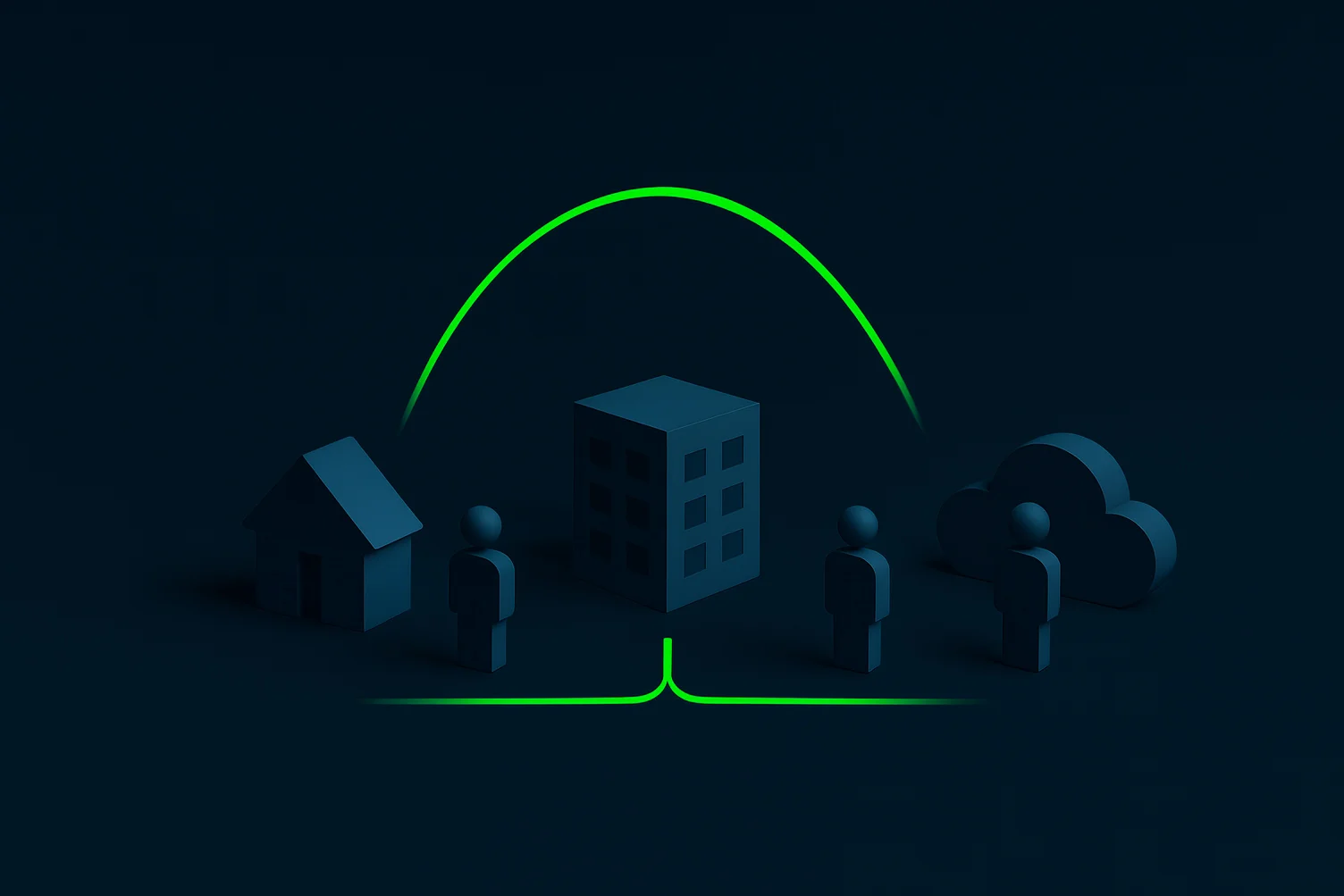
The office is no longer the center of the working world. Home office, cloud applications, global sites, IoT and Industry 4.0 systems - modern organizations are decentralized by design. Efficiency and flexibility increase - but the security logic that held for decades is becoming unstable.
“The classic perimeter is dead,” states the latest BSI Security Report. Attacks are shifting to where new gaps appear: remote access points, weak passwords, unpatched systems, and more. According to Bitkom, economic losses in Germany alone now exceed 200 billion EUR per year - a record figure that shows the scale of the threat.
Fragmentation: When IT Security becomes the Risk itself
A recent Swiss Cyber Security Index survey shows that many companies use 30 to 50 different security tools in parallel. What seems like protection often creates overload. “The result isn’t more security - it’s chaos,” says a Swiss CISO who wishes to remain anonymous.
This tool sprawl causes inconsistencies - different rule sets, confusing dashboards, and slow response times. Employees often don’t even receive basic guidance for safe daily behavior, such as recognizing phishing emails.
Gartner reaches a clear conclusion: “Complexity is the enemy of security”. This is where the paradigm shift begins - away from fragmentation, toward consolidation.
The strategy is unification: Instead of stacking more tools, organizations need an architecture that consolidates measures, unifies rules, and provides centralized visibility.
The Answer: Zero Trust & SASE
Zero Trust: Identity as the new Perimeter
“Never trust, always verify” - that’s the short formula. Instead of a network perimeter, a context-based model takes over: every person, device, and action is verified. Identity, device health, and location determine whether access is granted. Microsegmentation and automated password resets limit intruder movement.
SASE: Consolidation by Design
In 2019, Gartner introduced the term Secure Access Service Edge (SASE) - merging network and security in one cloud platform. Instead of isolated solutions, SASE combines:
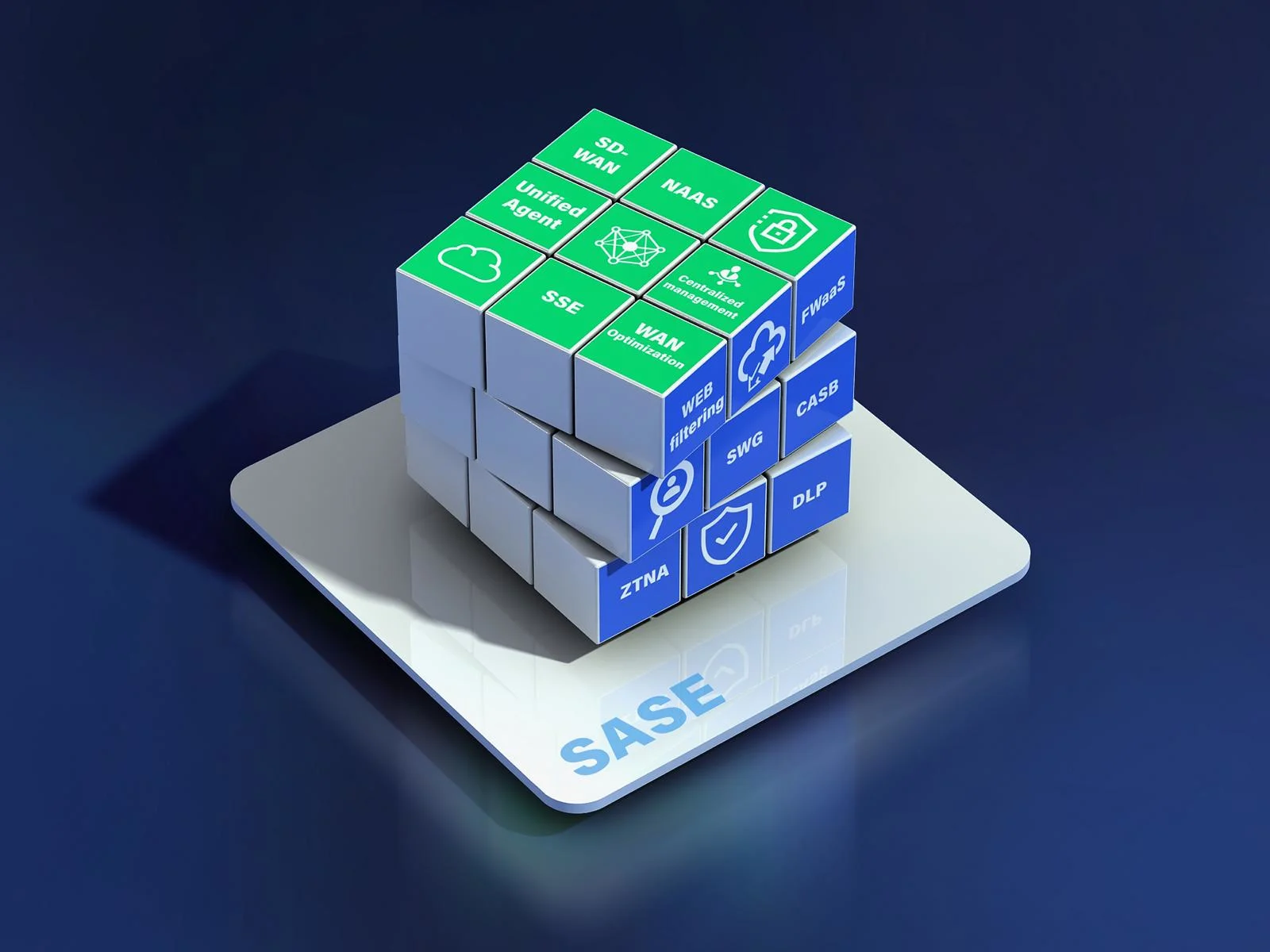
SD-WAN
Virtual Private Networks (as on-ramps)
Zero Trust Network Access
Secure Web Gateway
Firewall-as-a-Service
CASB/DLP
Threat Protection
This reduces tool clutter, increases transparency, and improves performance.
Cato Networks, technology partner of Consulteer InCyber, implemented this concept back in 2015 - with over 85 global Points of Presence, its own private backbone, and a single-pass architecture that inspects each data packet only once.
Technology Partner: Cato Networks
With Cato Networks, Consulteer InCyber relies on a pioneer: single-pass architecture (every packet inspected once), more than 85 own PoPs, a private backbone, and consistent policies - all supported by the Cato CTRL portal, a rich source for articles, reports, and threat intelligence.
Consulteer InCyber supports organizations in implementing and operating Zero Trust and SASE architectures - together with technology partner Cato Networks.
Goal: Ensure confidentiality, integrity, and availability of data - reliably and measurably.
Use Cases: Three Industries. Three Realities.

Industry: OT/IT Convergence as Achilles Heel
50 production sites worldwide, a patchwork of MPLS, internet links, and partner remote access - common in manufacturing.
Challenge: Complexity, insecure remote access, unclear responsibilities.
Solution: SASE overlay, Zero Trust for privileged access, DNS/SWG/IPS, centralized policies.
Benefit: New sites connect in days instead of months; protection applies consistently worldwide.
Financial Services: Compliance & Home Office in Tension
The pandemic forced banks and insurers to expand home office work rapidly. But private hardware, weak passwords, and a flood of phishing emails threatened compliance.
Problem: Compromised accounts, cloud compliance risks.
Solution: Zero Trust for all remote access, risk-based authentication, CASB/DLP, and awareness programs explaining sender, punctuation, and domain checks.
Benefit: Fewer incidents, verifiable data protection, more security in both office and home workplaces.
Critical Infrastructure: Resilience is Key
An energy provider experienced a ransomware attack that shut down control centers.
Problem: Fragmented tool landscape, no holistic architecture.
Solution: Segmentation, VPNs only as SASE on-ramps, Zero Trust policies, recovery runbooks.
Benefit: Faster restarts, clear responsibilities, strengthened availability.
Home Office Security - Practical Tips
Security at home is part of the overall architecture. What matters are simple, auditable measures:

Strong passwords, MFA
VPNs integrated into SASE
Timely software updates and patches
Harden routers, secure settings, segment home networks
Phishing awareness (sender, domain, punctuation marks)
Remember: every home workspace is both a potential entry point - and a line of defense.
Trends & Outlook
Three developments shape the security landscape:
Artificial Intelligence: Attackers use AI for convincing phishing emails and adaptive malware. Defenders counter with anomaly detection and automated response.
Regulation: GDPR, NIS2, and industry-specific frameworks tighten requirements. Verifiable measures become mandatory.
Edge & IoT: By 2030, Gartner expects more than 25 billion IoT devices online. Each weak point can trigger a chain reaction.
Outlook: Consolidation and intelligence will define the future of IT security.
Organizations implementing SASE and Zero Trust reduce risk - and gain resilience and agility.
Conclusion: Architecture over Patchwork
The future of IT security in decentralized organizations lies not in more tools, but in consistent architecture.
SASE and Zero Trust consolidate protection, reduce risk, and make organizations auditable.
With Consulteer InCyber and Cato Networks, this becomes a practical reality - from industry to finance to critical infrastructure.
Sources
Bitkom (2023): Economic Protection - Damages from Cyberattacks on German Companies
BSI (2024): IT Security Situation Report Germany
ENISA (2024): Threat Landscape Report
Gartner (2019-2025): SASE Reports, Magic Quadrant
Cato Networks (2024/25): Cato CTRL Reports, Whitepapers
Swiss Cyber Security Index (2024): Employee Awareness Survey in DACH
Heise Security / Golem.de: Articles on IT Security